Skip to content

Black Boxes, Dash Cams, and Modern Repairs: What Drivers Need to Know

Kwp image feb 6  2026  03 27 54 pm

Black Boxes, Dash Cams, and Modern Repairs: What Drivers Need to Know

Watch Now

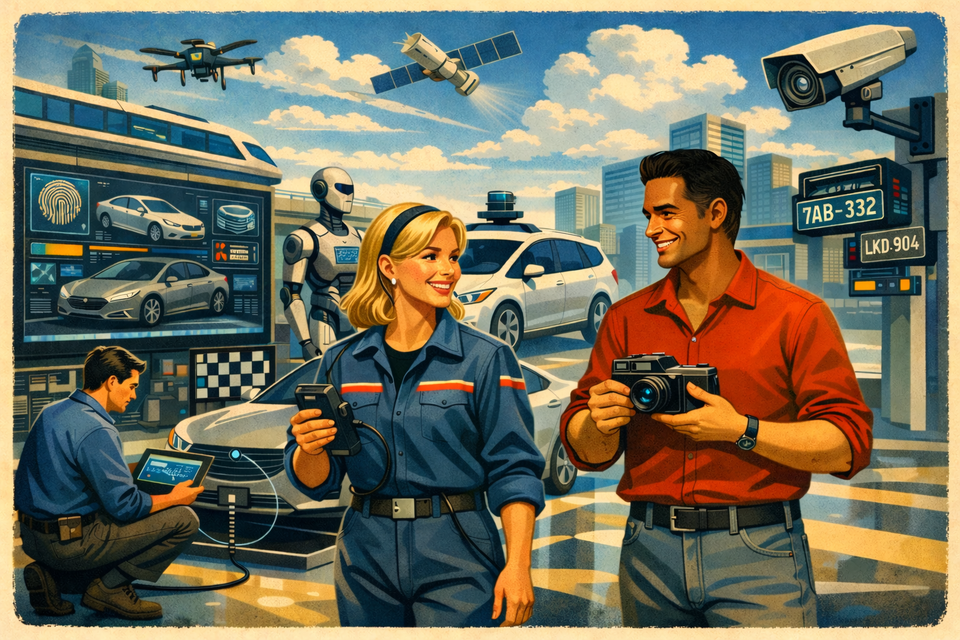
In this episode of the C&C Auto Show, Aaron, David, and Jamie take calls and dig into how fast vehicles are changing—and what that means for everyday drivers. From proposed “black box” data expansion (and who should have access) to license plate readers, dash cams, and even self-driving taxi incidents, the conversation keeps circling back to one big theme: technology can protect you, but it can also create new risks and costs.

They also get practical about repair realities—why some shops won’t install customer-supplied parts, why older vehicles can be harder to service, and why newer bumpers and ADAS systems can turn minor hits into major repair decisions. Listen or watch the embedded episode to hear the calls, the tech tip quiz moments, and the real-world examples behind the advice.

Questions and Answers

Quick answers on black box privacy, dash cams, ADAS repairs, and other real-world issues discussed in this episode.

Who owns the data in a car’s “black box” and driver-monitoring systems? +

In this episode, the team talks about proposed expanded data recording (steering, pedals, driver-assist status, and more) and the privacy questions it raises. The big issue is who controls that information—drivers, manufacturers, insurers, or government agencies—and how it could be accessed. The show also raises concerns about whether video from inside or outside the car should be included at all.

Can insurance companies or attorneys use your vehicle data after a crash? +

Potentially, yes—especially when fault is disputed and someone wants to “subpoena the car.” The show points out that more data can help clarify what happened, but it can also become a loophole for claim denials or disputes if there aren’t strong consumer protections. The hosts emphasize that clear rules and driver rights matter as data collection increases.

Why do dash cams keep coming up on the show—are they really worth it? +

A dash cam can save you time, money, and headaches when the story doesn’t match the facts. On the show, a caller mentioned a case where dash cam footage helped resolve blame quickly instead of dragging out for months. The takeaway: it’s a simple way to protect yourself when witnesses or other drivers get it wrong.

Why can a small bumper bump become a big (and expensive) repair today? +

Because bumpers aren’t just “plastic covers” anymore—they’re packed with sensors and safety tech. The episode includes a caller’s story of a very low-speed impact that still triggered an airbag issue and led to a total loss decision. Even light contact can mean expensive parts, procedures, and required checks on modern vehicles.

Do you still need a scan and calibration if there are no warning lights on? +

Yes. The hosts explain that warning lights only come on when the system detects a fault, and a sensor can be mis-aimed without triggering a light. They share a real example where a rear camera was off by two degrees after a minor bump—enough to be out of calibration—despite no dash warnings. A proper scan and calibration check is how you confirm the system is actually seeing what it’s supposed to.

Why do some automakers require OEM bumpers and specific paint near sensors? +

Some manufacturers specify that certain bumpers can’t be repaired in the sensor “zone,” and in some cases require a new OEM bumper. The show explains why: thickness, materials, and even paint composition can affect how signals pass through for features like blind spot monitoring and radar. The goal is to make sure the safety system works the way it was designed to.

Why do many repair shops refuse to install parts that customers bring in? +

Money is part of it, but the bigger issues are fit, quality, time, and warranty. The episode explains that customer-bought parts can be wrong, take longer to install, or fail right out of the box—and the shop often can’t get labor reimbursement on a part they didn’t supply. Many shops will install them only if you understand there’s little to no warranty on the work if that part fails.

Why is it harder to find shops willing to work on older vehicles like an ’89 Bronco? +

It’s a mix of tools, time, and expectations. The show explains that older computer/diagnostic systems (like early OBD setups) may require equipment many shops no longer have, and manual testing can be very time-consuming. On top of that, older components can break during repair simply due to age, which can create disputes—so some shops avoid the risk unless they specialize in older vehicles.

How does key fob cloning happen, and how can you lower the risk of theft? +

The episode discusses how someone can copy or “clone” a fob signal during a test drive or when keys are left accessible. Once they have that signal, they may return later and drive the vehicle away—sometimes just to joyride, sometimes to steal it. The key lesson: keep tight control of keys at dealerships and be mindful of where your fob is stored and exposed.

What does the Waymo school drop-off incident tell us about autonomous tech? +

The show references a January 23 incident in Santa Monica where a Waymo vehicle struck a child during school drop-off, and discusses how the vehicle slowed and stopped instead of continuing on. It sparked a bigger conversation about how fast technology is moving, what “safety” should look like, and whether advanced systems can react faster than humans in certain situations. The hosts also point out that more tech can mean more cost and complexity for everyday drivers.

Podcast Available On: